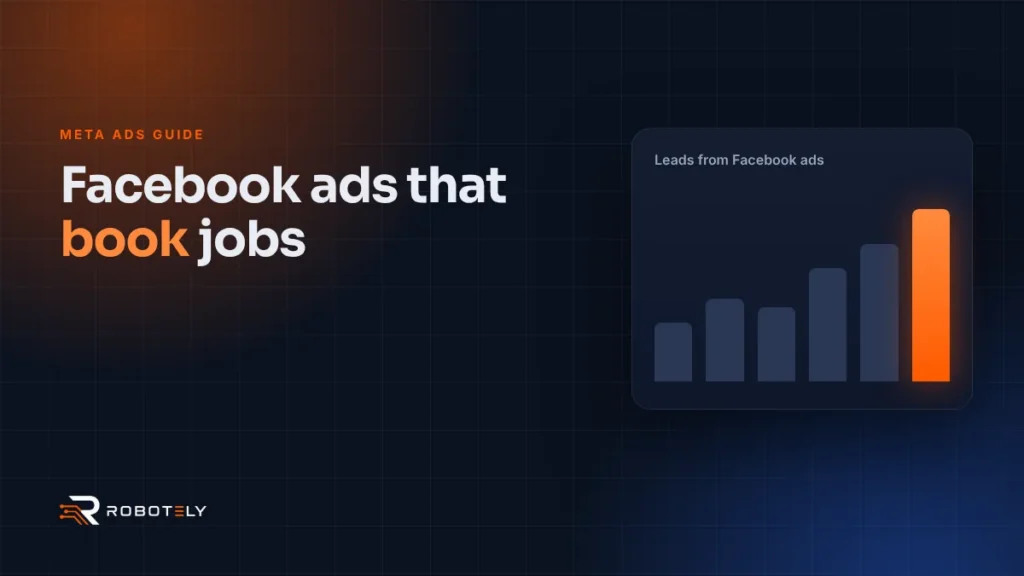
Do Facebook ads work for tradesmen?
Yes, for the right jobs. Facebook and Instagram put your work in front of local people before they start searching, so they suit jobs people plan and compare.
Think of a new garden, a kitchen refit or a full house clearance. Nobody types those into Google at 2am in a panic. They scroll past a striking before-and-after, save it, and get in touch weeks later. A blocked drain or a burst pipe is different. That person searches right now, which is where Google Ads and Maps win. Our Google Ads vs SEO guide covers the search side.
One UK-specific point: since late 2025, people in the UK can pay a monthly subscription to use Facebook and Instagram without ads. Those who stay on the free version still see ads, so most of your audience is still reachable.
Lead forms, WhatsApp or your website: which should you use?
Most trades do best with a lead form or a WhatsApp campaign, because both let people contact you without leaving the app. Sending traffic to your website works too, but only if the page is fast and built to convert on a phone.
| Campaign type | How it works | Good for | Watch out for |
|---|---|---|---|
| Instant lead form | A form opens inside Facebook, pre-filled with the person’s details | Quote requests for kitchens, driveways, loft conversions | Easy to submit, so some leads are low quality |
| Click to WhatsApp | The button opens a WhatsApp chat with you | House clearance, gardening, odd jobs where photos help | You must reply quickly, often evenings |
| Website traffic | The ad sends people to a page on your site | Trades with a strong portfolio and quote form | Slow or messy pages waste the click |
WhatsApp’s own guide to ads that click to WhatsApp explains that these ads run on Facebook and Instagram and open a chat with your business. For a house clearance firm, that’s handy. The customer can send photos of the loft straight away, and you can price it before you visit.
Want Facebook ads that bring in real enquiries?
We plan, write and manage Meta campaigns for UK trades, using your own job photos and video.
How do you target your local area properly?
Target the towns or postcodes you actually cover, and then check where your ads really went. Meta’s location targeting is looser than most people expect.
As Jon Loomer explains, Meta’s default setting reaches people “living in or recently in” a location, so people passing through can see your ad. An option to reach more people likely to respond can also widen delivery beyond your chosen area. For a local trade, these settings can burn budget on people you’ll never visit.
- Choose specific towns or a radius around your base, not a whole county.
- Untick any option that lets Meta expand beyond your chosen locations.
- Name the area in the ad itself, for example “Driveways across Plymouth and Plympton”.
- Ask for the postcode in your lead form so you can spot out-of-area leads.
- Check the location breakdown in Ads Manager after the first week.
What makes a good Facebook ad for a local trade?
A good trade ad shows real work, says where you work and tells people exactly what to do next. Stock photos and vague slogans get scrolled past.
Here are three examples of the kind of ads that suit different trades:
- Landscaper: a 15-second before-and-after of an overgrown garden turned into a new patio, with the caption “Patios and gardens in Nottingham. Send us a photo for a rough price.”
- Kitchen fitter: a short walkthrough of a finished kitchen, filmed on a phone, with a lead form asking for room size and timescale.
- House clearance: a time-lapse of a van being loaded, with a WhatsApp button and the line “Send photos of what needs clearing.”
Video usually tells the story faster than a single photo. Our guide to video marketing for tradesmen shows how to turn job photos and clips into short reels, and our video editing service can do the editing for you.
How do you filter out poor-quality leads?
Make the form ask a little more of people. A slightly harder form gives you fewer leads, but far fewer time-wasters.
Meta’s instant forms have a “Higher intent” type that adds a review step before someone submits. According to Jon Loomer’s guide to instant forms, you can also add custom questions, such as multiple choice and short answer, and conditional logic that closes the form for people who say they’re not a fit.
- Choose the Higher intent form type instead of More volume.
- Ask for the postcode and a short description of the job.
- Add a multiple choice question on timescale, such as “Within a month” or “Just researching”.
- Ask about budget range for bigger jobs like kitchens or extensions.
- Call or message every lead within the hour, while they still remember you.
How much should you spend, and how do you judge it?
Spend an amount you’re comfortable testing for a few weeks, then judge it by booked jobs, not clicks or likes. There’s no single right budget, because a kitchen fitter and a gutter cleaner earn very different amounts per job.
Keep a simple record of every lead: where it came from, whether you quoted, and whether you won it. After a month you can see what each booked job cost you in ads and compare it with the profit on that job. If a campaign doesn’t pay for itself, change the ad, the offer or the area before you add budget. Our guide to Google Ads costs for tradesmen uses the same way of thinking.
FAQs
Do Facebook ads work for tradesmen?
Yes, mainly for planned and visual jobs such as kitchens, bathrooms, landscaping, driveways and house clearance. They work less well for emergency jobs, where people search Google and want someone right away.
How much should I spend on Facebook ads as a builder?
There’s no fixed figure. Set a budget you can test for a few weeks, track every lead through to a booked job, and work out what each job cost you in ads. Only increase spend once a campaign is paying for itself.
Facebook ads or Google Ads for trades?
Google Ads catches people already searching, so it suits urgent jobs like plumbing or locksmith work. Facebook ads reach local people before they search, so they suit planned, visual jobs. Many trades use both for different services.
What makes a good Facebook ad for a local business?
Real photos or video of your own work, the town you cover named in the ad, and one clear next step, such as a short lead form or a WhatsApp button. Avoid stock images and vague slogans.
How do I get better quality leads from Facebook lead ads?
Use the Higher intent form type, ask for a postcode and a short job description, add a question about timescale, and respond quickly. Fewer leads that are a better fit are worth more than lots of cold ones.